is a sixth class island municipality in the province of Palawan, Philippines, located between the islands of Palawan and Negros in the Sulu Sea. As of the 2010 census, it has a population of 7,116 people. Cagayancillo is the closest settlement to the Tubbataha National Marine Park. The word Cagayancillo is Spanish for "Little Cagayan."
The farthest provincial limit of the province of Palawan in the east
is the island of municipality of Cagayancillo. It is approximately 178
nautical miles (330 km) east of Puerto Princesa City and only 72
nautical miles (133 km) southwest of Antique. It is located near the
middle of the Sulu Sea.
There are neither mountain ranges nor forested areas in the
municipality. A hilly portion in the northeastern part of the main
island has a slope of 3-82%. The other areas are flat with the highest
elevation around 2 to 3 meters. Majority of the island has a sandy loam soil not enough to support a forest.
Cagayancillo is the smallest municipality in the province of Palawan
with a total land area of only 2,639 hectares (6,520 acres) as of 2007. The municipality is composed of 31 islands and islets and is subdivided into 12 barangays and two island sitios (Cavili and Calusa) included under the political jurisdiction of Magsaysay.
Cagayancillo belongs to Type II
climate wherein there is no distinct wet or dry season. The dry season
is usually from December to May with March as the driest month. The wet
season is usually from May to November with August as the rainiest
month.
The municipality is exposed to both monsoons. The
Amihan or northeast winds blow from November to March while the
Habagat or southwest winds visit the area from June to October. The summer months from April to June receive the moderate
daplak wind from the northwest.
History
The island was known to the first Spanish settlers in the Archipelago simply as
Cagayan. They describe this territory as "two low islets about fifteen leagues from the island of Panay". They ruled these islets from the town of Arevalo in Iloilo by sailing south-southeast from this part of Panay,
to the open sea. The islands are surrounded by many low reefs. But the
Spaniards were able to discover their narrow entry, avoiding the great
danger that awaited ships.
During the early period of Spanish colonizations, these small islets
were inhabited by four hundred people, all of whom were very skillful
shipbuilders. They were from Panay, and they came to these islets in
order to fortify themselves by the reefs, for fear of pirates. Then they
undertook to return to Panay in order to dwell there. But many of their women died there. Seeing this, as they were soothsayers,
they returned to the islands of Cagayan, from where they set out every
year, and scattered themselves over all the islands to build ships. They
built the ships of the Spanish Royal Navy in the Philippines, as well
as galleys, galliots, and frigates. They also helped in repairing and righting ships. Being the most important people in the islands for the Spaniards, the adelantado Miguel Lopez de Legazpi allotted their islands to the encomenderos of Negros Island. Afterwards, the colonizers found it best to put them under the direct control of the Spanish Crown. Thus, it was governed from the town of Arevalo in Iloilo.
Historically, the islands also became part of Antique Province. It was made into a municipality in 1810, with Omabong as its first mayor.
During the American regime, it came under the jurisdiction of Negros Occidental.
In 1959, the following sitios were constituted into barrios of Cagayan:
- the sitios of Banted, Nipay, Dool, Cavili, Cabayog and Langtad, as barrio Talaga;
- the sitios of Ibiok, Panderse, Lato and Gatung-an, as barrio Mampio; and
- sitio Nusa as Barrio Nusa
Demographics
| Population census of Cagayancillo |
| Year |
Pop. |
±% p.a. |
| 1990 |
5,082 |
— |
| 1995 |
6,717 |
+5.74% |
| 2000 |
6,348 |
−1.12% |
| 2007 |
6,506 |
+0.35% |
| 2010 |
7,116 |
+3.03% |
Source: National Statistics Office
Cagayancillo Fort
Cagayancillo Fort is one of the surviving defense forts in Palawan built during the Spanish Colonial Period.
Work on the fort was started in the late 16th century by Father Nicolas
Melo and Father Alonso Colosa, but it was not completed till the early
18th century by Father Hipolito Casiano, spanning almost 130 years. The 162-sq. meter (1,740-sq. foot) diamond-shaped fort was built on the
coast on a high point on the island and made from sea rocks mixed with
lime. Like some of the other Spanish forts in this area, inside is a
church surrounded by its massive 12 metres (39 ft) high and 3 metres
(9.8 ft) thick walls, providing a safe place for the residents during
marauding pirate attacks. The other Spanish Colonial fortifications in Palawan are Fort Santa Isabel in Taytay and Cuyo Fort in Cuyo.
|
Education
Cagayancillo has a total of 8 public elementary schools with a total
of 37 classrooms. A total of 35 teachers are available in school year
2000–2001 for total enrollees of 1,110. This provides an average
classroom - pupil ratio and teacher - pupil ratio 1:39. This ratio is
above the national standard of 1:50 classroom - pupil and teacher- pupil
ratios. Enrollment participation rate is estimated at 85.03% for school
year 2000–2001. In secondary education, the municipality has one (1)
national high school located in the Poblacion. There were 9 classrooms
and 13 secondary school teachers giving an average ratio of 1:52
classroom -student ratio. Secondary school participation rate was low at
69%.
[citation needed]
Health services
There are no hospitals in Cagayancillo.
Health facilities in the municipality consist of 1 rural health unit
and 4 Barangay Health Stations. In terms of health manpower, the
municipality employs 1 municipal health officer, 1 public health nurse, 1
rural health midwife and 1 rural sanitary inspector.


Municipality/City:
CAGAYANCILLO
| Region |
REGION IV-B (MIMAROPA) |
Code |
170000000 |
| Province |
PALAWAN |
Code |
175300000 |
| Municipality/City |
CAGAYANCILLO |
Code |
175308000 |
| Income Classification: |
6th Class |
Registered Voters (2010):
5,055 |
| Population :
(as of May 1, 2010):
7,116 |
| District: |
1st |
|
| Barangays (Number: 12) |
| Name |
Code |
Urban/Rural |
Population
(as of May 1, 2010) |
| Bantayan (Pob.) |
175308001 |
Rural
| 424 |
| Calsada (Pob.) |
175308002 |
Rural
| 258 |
| Convento (Pob.) |
175308003 |
Rural
| 374 |
| Lipot North (Pob.) |
175308004 |
Rural
| 243 |
| Lipot South (Pob.) |
175308005 |
Rural
| 153 |
| Magsaysay |
175308006 |
Rural
| 1,590 |
| Mampio |
175308007 |
Rural
| 787 |
| Santa Cruz |
175308009 |
Rural
| 1,046 |
| Tacas (Pob.) |
175308010 |
Rural
| 249 |
| Talaga |
175308011 |
Rural
| 1,184 |
| Wahig (Pob.) |
175308012 |
Rural
| 243 |
Notes:
1. Figures on registered voters are partial data from
Commission on Elections (COMELEC) which may still be subject to
corrections/adjustments from their field offices
2. Figures on registered voters exclude data on absentee voters.
3. Figures on registered voters are as of January 2010.
4. PSGC Information are as of 31 March 2014.
5. Income Classification based on Department of Finance Department Order No.23-08 Effective July 29, 2008.
6. Urban/rural classification based on 2000 CPH, Report No. 4 Urban Population, National Statistics Office, June 2006.
7.Legislative District Source: Records and Statistics Division, Commission on Elections (COMELEC): As of May 2013.
8. Population (as of May 1, 2010): a) Total Population
Count by Region, Province, City/Municipality and Barangay as of May 1,
2010 ; b) Population of Highly Urbanized Cities (HUCs) are excluded in
the total population of their respective provinces but are included in
the regional total; and c) Population of barangays with boundary
disputes are excluded in total population of their respective
municipalities and cities but are included in the provincial and
regional total. Source: 2010 Census of Population: National Statistics
Office (NSO).
9. Source: National Statistics Office (NSO) http://www.census.gov.ph/content/2010-census-population-and-housing-reveals-philippine-population-9234-million
|
|---|
| Island Municipality |

Map of Palawan showing the location of Cagayancillo |
|
Location within the Philippines
|
Coordinates:  9°28′55″N 121°2′10″ECoordinates: 9°28′55″N 121°2′10″E 9°28′55″N 121°2′10″ECoordinates: 9°28′55″N 121°2′10″E |
| Country |
Philippines |
| Region |
MIMAROPA (Region IV-B) |
| Province |
Palawan |
| Congr. district |
1st district |
| Formed |
1810 |
| Government |
| • Mayor |
Lourdes C. Lanoy |
| Area[1] |
| • Total |
26.39 km2 (10.19 sq mi) |
| Population (2010)[2] |
| • Total |
7,116 |
| • Density |
270/km2 (700/sq mi) |
| Time zone |
PST[3] (UTC+8) |
| Zip Code |
5321 |
| Dialing code |
48 |
| Website |
cagayancillo.com |
Cagayancillo is a sixth class island municipality in the province of Palawan, Philippines, located between the islands of Palawan and Negros in
Province: PALAWAN
| Region |
REGION IV-B (MIMAROPA) |
Code |
170000000 |
| Province |
PALAWAN |
Code |
175300000 |
| Registered Voters (2010):
535,279 |
Income Classification:
1st Class |
Municipalities and Cities
Name
(click name to view details) |
Code |
Income Class |
City Class |
District
(2013) |
Registered Voters 1 (2010) |
Population
(as of May 1, 2010) |
Land Area
(as of 2007, in hectares) |
1.
ABORLAN
|
175301000 |
1st |
|
3rd |
17,995 |
32,209 |
80,733 |
2.
AGUTAYA
|
175302000 |
5th |
|
1st |
5,711 |
11,906 |
3,731 |
3.
ARACELI
|
175303000 |
4th |
|
1st |
7,525 |
14,113 |
20,430 |
4.
BALABAC
|
175304000 |
2nd |
|
2nd |
18,114 |
35,758 |
58,160 |
5.
BATARAZA
|
175305000 |
1st |
|
2nd |
30,361 |
63,644 |
72,620 |
6.
BROOKE'S POINT
|
175306000 |
1st |
|
2nd |
32,109 |
61,301 |
130,340 |
7.
BUSUANGA
|
175307000 |
3rd |
|
1st |
11,144 |
21,358 |
39,290 |
8.
CAGAYANCILLO
|
175308000 |
6th |
|
1st |
5,055 |
7,116 |
2,639 |
9.
CORON
|
175309000 |
1st |
|
1st |
21,811 |
42,941 |
68,910 |
10.
CUYO
|
175310000 |
4th |
|
1st |
11,350 |
21,847 |
8,495 |
11.
DUMARAN
|
175311000 |
3rd |
|
1st |
11,855 |
21,397 |
43,500 |
12.
EL NIDO (BACUIT)
|
175312000 |
1st |
|
1st |
17,910 |
36,191 |
92,326 |
13.
LINAPACAN
|
175313000 |
5th |
|
1st |
8,275 |
14,180 |
19,544 |
14.
MAGSAYSAY
|
175314000 |
5th |
|
1st |
6,527 |
11,965 |
4,948 |
15.
NARRA
|
175315000 |
1st |
|
2nd |
32,455 |
65,264 |
83,173 |
16.
PUERTO PRINCESA CITY (Capital)
|
175316000 |
1st |
Highly Urbanized |
3rd |
135,417 |
222,673 |
238,102 |
17.
QUEZON
|
175317000 |
1st |
|
2nd |
25,947 |
55,142 |
94,319 |
18.
ROXAS
|
175318000 |
1st |
|
1st |
36,636 |
61,058 |
117,756 |
SOFRONIO E
VICENTE
| 175319000 | 1st | | 1st | 18,123 | 30,919 | 146,294 |
20. TAYTAY
| 175320000 | 1st | | 1st | 34,030 | 70,837 | 125,768 |
21. KALAYAAN
| 175321000 | 5th | | 1st | 299 | 222 | 29,000 |
22. CULION
| 175322000 | 3rd | | 1st | 10,233 | 19,543 | 49,959 |
23. RIZAL (MARCOS)
| 175323000 | 1st | | 2nd | 18,948 | 42,759 | 125,647 |
SPAÑOLA
|
175324000 |
2nd |
|
2nd |
17,449 |
29,997 |
47,391 |
Notes:
1. Figures on registered voters are partial data from
Commission on Elections (COMELEC) which may still be subject to
corrections/adjustments from their field offices
2. Figures on registered voters exclude data on absentee voters.
3. Figures on registered voters are as of January 2010.
4. PSGC Information are as of 31 March 2014.
5. Income Classification based on Department of Finance Department Order No.23-08 Effective July 29, 2008.
6. Urban/rural classification based on 2000 CPH, Report No. 4 Urban Population, National Statistics Office, June 2006.
7.Legislative District Source: Records and Statistics Division, Commission on Elections (COMELEC) As of May 2013.
8. Population (as of May 1, 2010): a) Total Population
Count by Region, Province, City/Municipality and Barangay as of May 1,
2010 ; b) Population of Highly Urbanized Cities (HUCs) are excluded in
the total population of their respective provinces but are included in
the regional total; and c) Population of barangays with boundary
disputes are excluded in total population of their respective
municipalities and cities but are included in the provincial and
regional total. Source: 2010 Census of Population: National Statistics
Office (NSO).
9. Source: National Statistics Office (NSO) http://www.census.gov.ph/content/2010-census-population-and-housing-reveals-philippine-population-9234-million
10. Data on land area are from the Land Management Bureau.
MUNICIPALITY OF CAGAYANCILLO
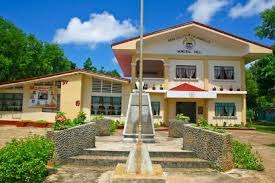
CAGAYANCILLO VIEW

Cagayancillo
Alternates names : Nalad Cagayancillo - Coordinates
UTM : UL05
Geographical coordinates in decimal degrees (WGS84)
Latitude : 9.577
Longitude : 121.207
Geographical coordinates in degrees minutes seconds (WGS84)
Latitude : 9 34' 37''
Longitude : 121 12' 26''
Places near Cagayancillo
Santa cruz - Tanusa - | 
Satellite view of Cagayancillo
KML Export for Google Earth
Google maps view of Cagayancillo
Google links for Cagayancillo
Attraction in Cagayancillo
|

The Tubbataha Reef Natural Park:

The reef around Cagayan-Island of the world. It's a UNESCO-world cultural
heritage and one of the top-10 divespots in the world. There you have the
possibility to see big sea fans, blanket fish (Manta birostris), different
sharks e.g. whale sharks, Dolphins and a lot more.
Following pictures are
from www.sipalay.com
CAGAYANCILLO ISLAND


